
Guide
Fabric Shrinkage and Testing
A garment that measures perfectly at inspection and shrinks out of spec on the customer’s first wash was correct when it shipped. Inspection cannot catch it. Only testing before bulk can.
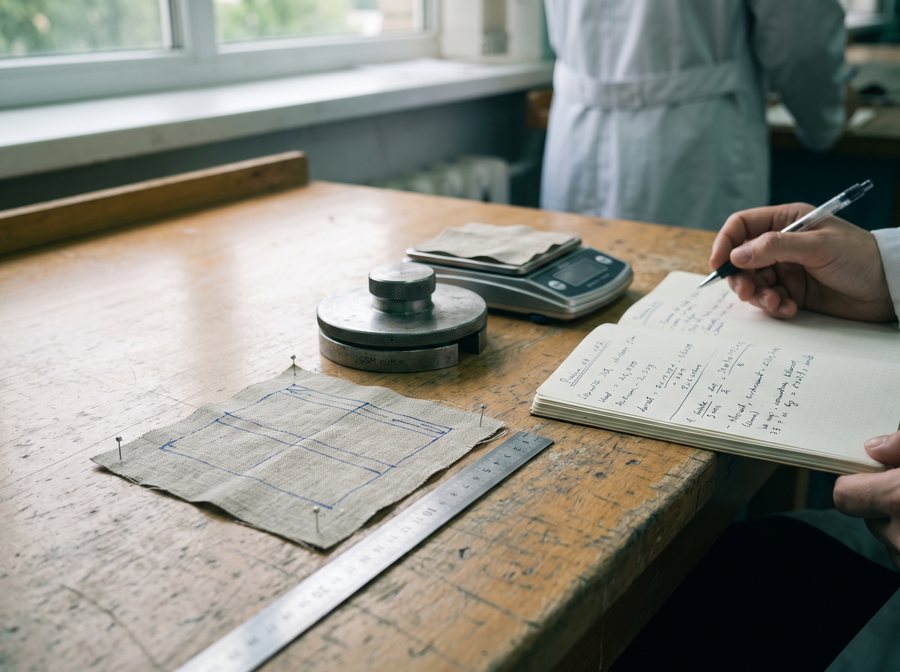
Why shrinkage is the quiet one
Most quality problems are visible. This one is not: the garments pass final inspection, arrive on spec, sell, and come back as returns weeks later. By then the fabric is cut, the run is sold and the fix is a new pattern on the next order.
Test before the pattern is finalised
The sequence matters. Test the actual bulk fabric, in the care method that will be on the label, and then adjust the pattern so the garment measures correctly after washing. Testing after the pattern is locked tells you about a problem you can no longer cheaply fix.
How to run a basic shrinkage test
- Cut a sample of the bulk fabric, at least 50 x 50 cm
- Mark reference lines a known distance apart in both directions — length and width — with a permanent fabric marker
- Condition it flat at room temperature before measuring
- Wash and dry it exactly as the care label will instruct, and do it three times rather than once
- Re-measure between the same marks
- Shrinkage % = (original − final) / original × 100, calculated separately for length and width
Three cycles matter because some fabrics keep moving after the first wash. A fabric that shrinks 3% once and 6% by the third cycle is a different problem from one that settles immediately.
What is acceptable
It depends on fabric and category, but for most cotton knits a residual shrinkage inside roughly 3-5% is normal and manageable by pattern compensation. Beyond that, or where length and width differ sharply, you are looking at a finishing issue at the mill — ask about compacting or pre-shrinking before you accept it.
Other tests worth running on bulk
- Colourfastness to washing — does the colour bleed onto other garments?
- Colourfastness to rubbing (crocking) — does the dye transfer dry or wet? Dark denim and pigment dyes are the usual offenders
- Torque or spirality on knits — do the side seams twist after washing?
- Pilling resistance for knits and fleece
- Seam slippage and seam strength on wovens
- Weight (GSM) against the approved spec
Who pays for it
Mills will often provide test data for their own fabric, and for stock programmes that is usually enough. For anything custom-dyed or custom-finished, commissioning an independent test is cheap relative to a run that shrinks. Either way, get it in writing before fabric is cut.
Put the result in the tech pack
Record the measured shrinkage against the fabric line in the BOM, and note in the spec whether the measurements are pre-wash or post-wash. Factories need to know which one they are cutting to — and on a garment-dyed or washed product, getting that wrong is a whole ruined run.
Book a free discovery call and get a straight answer on your specific product.