
Guide
The Apparel Sampling Process, Explained
Proto, fit, PP and TOP. Each round has one job. Knowing which job you are doing is what stops sampling from going in circles.
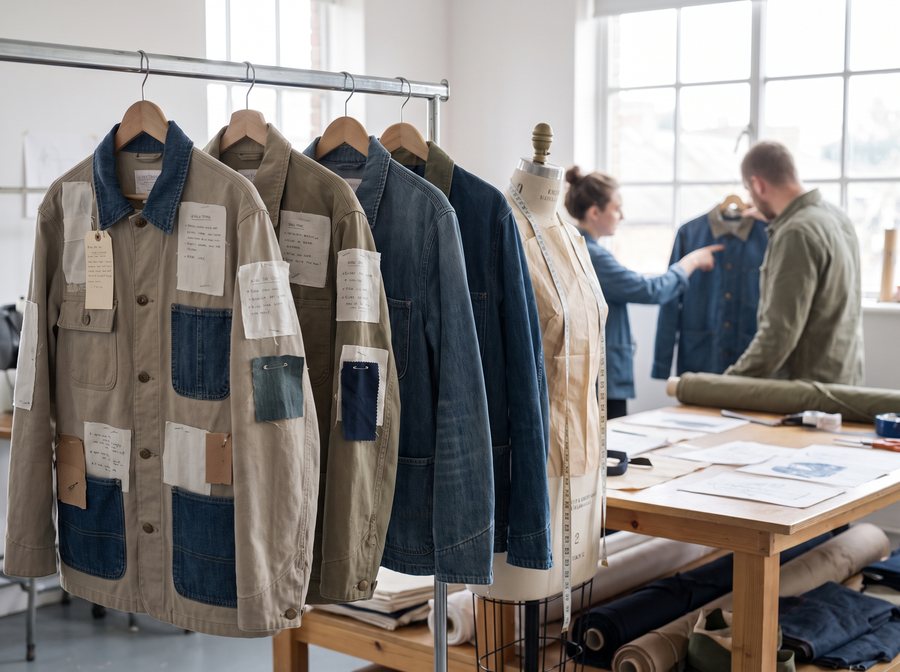
Proto sample
The first physical version. Its job is to prove the concept and the construction, usually in a substitute fabric. Expect it to be wrong in places — that is what it is for.
Fit sample
Made in the correct or closest-available fabric and measured against your spec sheet. This is where you run a fit session, correct points of measure and review the grade across sizes.
PP (pre-production) sample
Correct fabric, correct trims, correct labels, correct construction. Both you and the factory sign off on it, and it becomes the physical quality standard the bulk is judged against. Bulk should not be cut before this exists.
TOP (top of production) sample
Pulled from the actual production run. Its job is to confirm the bulk matches the approved PP before the shipment leaves. Measure it, photograph it, keep it.
How to cut rounds without cutting corners
- Write comments against the spec, with numbers — not adjectives
- Number every comment so the factory can answer each one
- Send a marked-up photo alongside the written comments
- Change one variable at a time where you can
- Approve in writing, and keep the approved sample sealed and labeled
Realistic timelines
Each round is typically two to four weeks domestically and longer overseas, before shipping. A three-round development on a simple style is a reasonable plan; complex outerwear or tailoring takes more. Build that into your launch calendar rather than compressing it later.
Book a free discovery call and get a straight answer on your specific product.