
Guide
How to Run a Fit Session
The fit session is where a sample becomes a product. An hour done properly saves a sample round; done casually, it generates one.
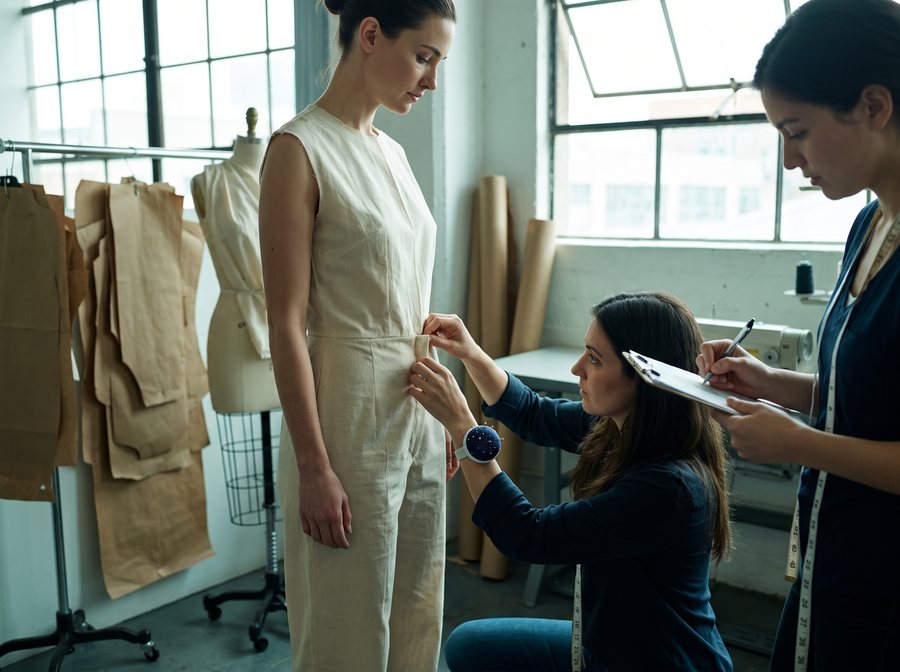
Before anybody puts the garment on
- Measure the sample flat against the spec sheet and write down every deviation
- Note which deviations are the factory missing the spec, and which are the spec itself being wrong — these need different fixes
- Have the spec sheet, the previous round’s comments and a camera ready
- Use the same fit model, or the same graded form, every time
That first step matters more than it sounds. If you have not measured the garment, you cannot tell whether a fit problem is a construction error or a design error, and you will give the factory a comment they cannot act on.
During the session
- Look at the garment at rest before asking the model to move
- Then check movement: arms forward and up, sitting, bending
- Work top-down and front-to-back in a consistent order so nothing is missed
- Pin adjustments rather than describing them — then measure what you pinned
- Photograph front, back, both sides, and every pinned change
- Say the number out loud as someone writes it down
Write comments the factory can act on
The difference between a round that converges and one that repeats:
- Bad: “make it a bit roomier through the body”
- Good: “increase chest 1.0 cm at full measure; keep armhole and shoulder as spec”
- Bad: “sleeves feel long”
- Good: “reduce sleeve length from CB by 1.5 cm; keep cuff opening as spec”
Number every comment so each can be answered individually, and state explicitly what should not change. Most unwanted knock-on changes happen because nobody said to leave something alone.
Check the grade, not just the sample
At the fit round, try at least one size above and one below the base. Fit problems at the extremes are grade-rule problems and they will not surface any other way until customers find them.
Decide, in the room
The most expensive thing about fit sessions is unresolved decisions. Every change left as “we will think about it” either delays the round or gets decided by someone on the factory floor. Name one person who can approve, and have them approve.
Close it out the same day
- Update the spec sheet with the agreed measurements
- Send numbered comments with the marked-up photos attached
- State clearly whether this is a revision or an approval
- Log it in the sample log with the date
- Keep and label the sample — you will want it at the next round
Book a free discovery call and get a straight answer on your specific product.